Nutrition before pregnancy
What is nutrition, and why is it important before pregnancy?
Good nutrition is about consuming a healthy balanced diet to ensure the body receives adequate nutrients for health and development. Poor nutrition may impact on pregnancy and birth outcomes as well as the future growth and development of the child.
What are the key nutrients before pregnancy?
Folic acid should be taken 3 months before trying to conceive and during the first 12 weeks of pregnancy. Folate can also be found in food sources such as dark green leafy vegetables, fortified breakfast cereals, broccoli and beans. Iron is required to support baby’s growth and development and increase a mother’s red blood cells to help to carry oxygen around the body and to the baby. To prevent iron deficiency anaemia during pregnancy, iron-containing foods such as red meat, fortified breakfast cereals, dried fruits, dark green leafy vegetables and beans should be consumed on a regular basis to meet the iron requirements. During pregnancy, woman need more of important nutrients, including calcium, omega 3 fatty acids, vitamin A, C and D.
Why is it important to stop drinking alcohol and caffeine before and during pregnancy?
Consuming alcohol can increase the risk of fetal alcohol syndrome (FAS). Alcohol passes through the placenta and leads to irreversible physical, behavioral and intellectual damage to the baby, resulting in lifelong learning disability, attention deficits, impulsive behaviour and growth deficiency. High intake of caffeine increases a mother’s heart rate which may increase stress to the baby and lead to miscarriages and low birth weight. Caffeine and tea must be taken in moderation, not more than 2 cups of coffee or tea per day.
Should I be eating for two?
‘Eating for two’ is a common misconception and it can cause excessive weight gain during pregnancy. A pregnant woman only requires additional 340 kcal daily from the second trimester onwards, and 450 kcal daily during the third trimester to meet the increased nutrient demands.
What is a healthy balanced diet during pregnancy?
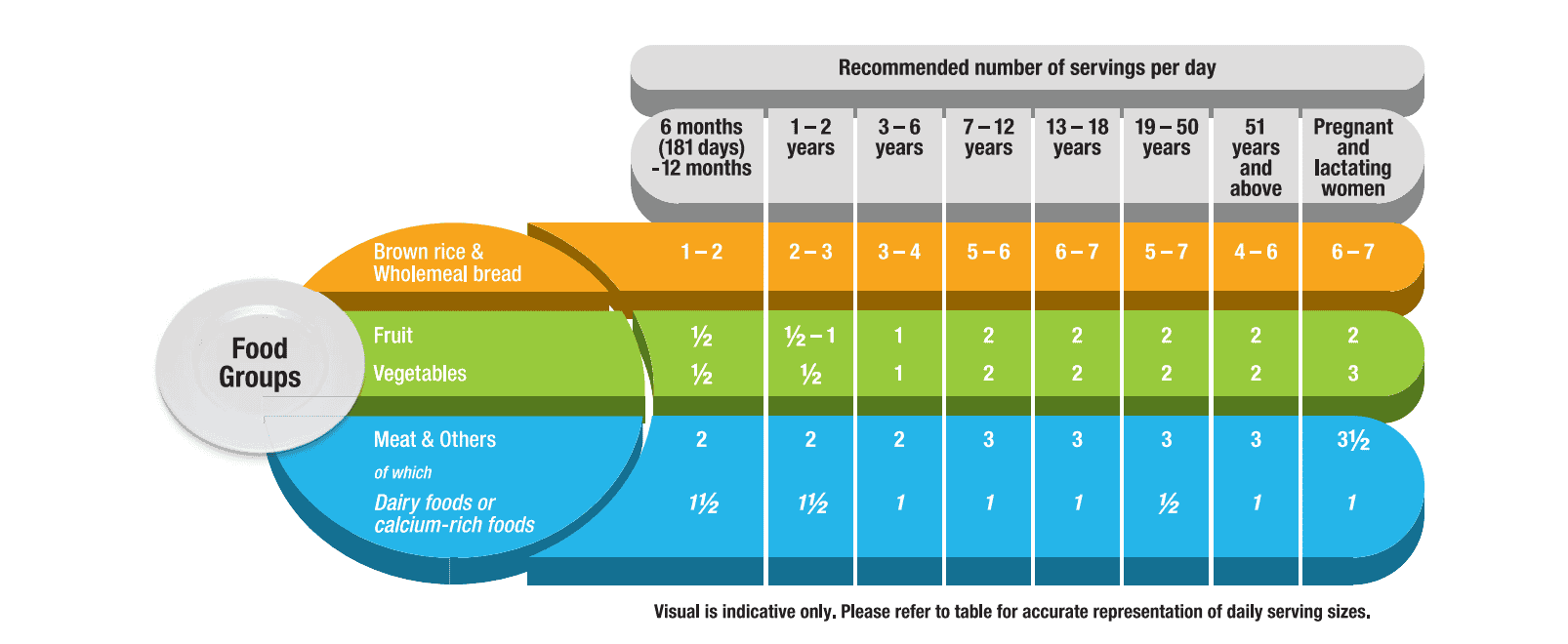
The diagram below shows the daily recommended servings of each food group for pregnant and breastfeeding women for the entire day:
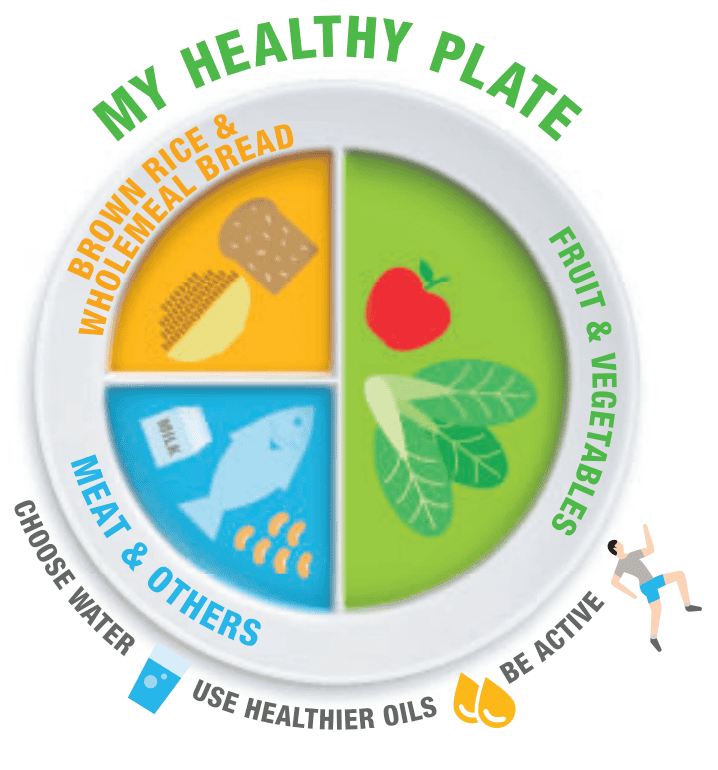
My Healthy Plate’ is a visual guide to show what a healthy balanced meal should look like and the correct proportions of different food groups to consume within a meal.
• Fill half of the plate with vegetables and a fruit
• Fill a quarter with whole grains (e.g. brown rice, wholemeal bread)
• Fill a quarter with meat or alternatives (e.g. tofu, beans, seafoods)
• Choose low fat or non-dairy (e.g. milk, yoghurt, cheese)
• Use healthier oils in cooking (e.g. olive oil, canola oil)
• Choose water as a first-choice of drink, avoid sugar sweetened beverages as they can easily lead to unhealthy weight gain
How much weight should I gain during pregnancy?
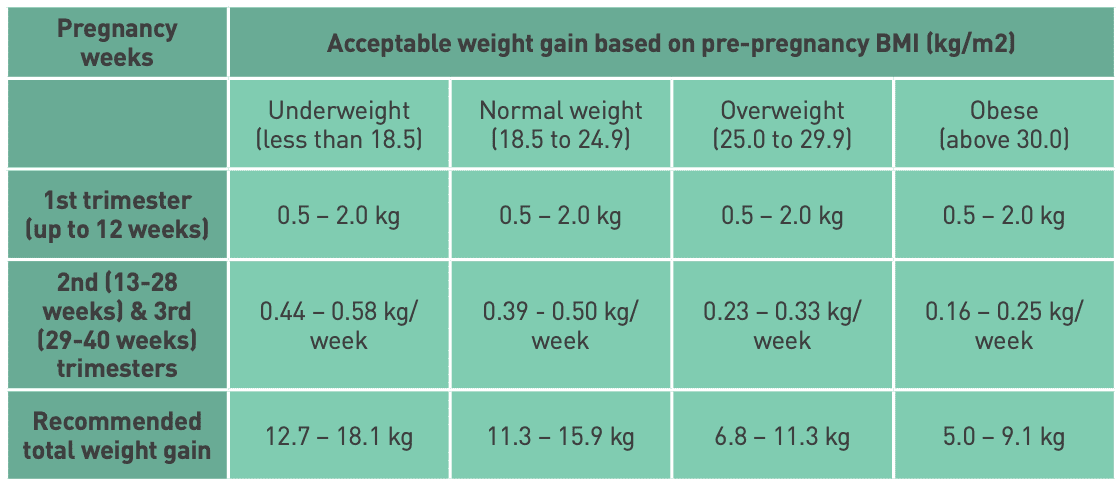
Pregnancy weight gain is determined by pre-pregnancy body mass index (BMI). The table below shows the acceptable pregnancy weight gain based on pre-pregnancy BMI status:
Why is it important to achieve healthy weight before pregnancy?
Excessive weight gain during pregnancy has been linked to a greater risk of complications and adverse health outcomes for both mother and child. Common pregnancy complications include gestational diabetes mellitus, pre-eclampsia and preterm birth. Maternal obesity also increases the risk of macrosomia (delivering big-sized babies), birth injury, caesarean birth and birth defects.
How can I eat healthily but within a budget?
Eating healthily does not mean eating expensive foods, but it needs to be intentional and may require planning a shopping list in advance. Convenience foods sometimes cost more than fresh ingredients and may not be as nutritious. Although some frozen foods like frozen vegetables, poultry and meat may be cheaper than fresh foods, they are equally adequate. Similarly, some canned foods, for example tuna, sardines, beans, vegetables and fruits are also good alternatives. If shopping at supermarkets, consider buying house brands as they usually cost less than the same products under special branding. Buying in bulk may provide some savings. However, if buying fresh ingredients in bulk, make sure the amount purchased can be used before it goes bad. That can be done by freezing the fresh produce on the same day to seal in the freshness. It is also not necessary to have meat or fish on a daily basis, other cheaper protein-rich alternatives include eggs and beans.
What are the foods to avoid during pregnancy?
Unpasteurised dairy products such as cow’s milk, goat’s milk, blue and soft cheeses may contain listeria that can cause an infection which leads to miscarriage and stillbirth. Raw and undercooked meat, liver and liver products or cured meats may have parasites in them which can cause toxoplasmosis and lead to miscarriage. Raw or partially-cooked eggs and foods with raw egg in them (e.g. mayonnaise or mousse) may contain salmonella, which can increase the risk of food poisoning.
Large deep-sea fishes such as shark, swordfish, king mackerel and big eye tuna should be avoided as they contain high levels of mercury, which can affect the development of baby’s neurological system. Other fishes such as sea bass, snapper, Spanish mackerel and canned albacore tuna are allowed to be consumed at 1 serving per week with no other fish consumption within the same week; oily fishes such as salmon, trout and mackerel should not exceed 2 servings per week. Unwashed salads or ready-to-eat salads should be avoided during pregnancy as they may carry bacterial contamination from soil.
Reference: KK Women’s and Children’s Hospital, Health Promotion Board
Source for images: “My Healthy Plate” is a friendly visual tool on healthy eating habits designed for Singaporeans by the Health Promotion Board (HPB).
For more information, refer to https://www.healthhub.sg/livehealthy/928/pregnancy-nutrition-during-pregnancy-eatingright-for-two
Secara keseluruhan, setiap individu bertanggungjawab ke atas kesihatan sendiri. Wanita yang merancang untuk hamil perlu menitikberatkan hal ini kerana persiapan diri penting untuk menyediakan persekitaran/suasana yang baik untuk bakal janin. Amalkanlah pemakanan yang seimbang lagi bernutrisi sebaik saja merancang untuk hamil dan diteruskan sepanjang kehamilan agar dapat melahirkan generasi yang sihat. Pemakanan yang sihat akan mengurangkan risiko kesihatan semasa hamil pada ibu dan bayi, dan seterusnya melahirkan bayi yang sihat. Pastinya setiap pasangan mengharapkan bayi yang bakal lahir bukan sahaja cukup sifat, tetapi juga sihat fizikal dan mental. Bagi memastikan kesihatan bayi terjamin, penjagaan dan pemakanan yang sempurna perlu dimulakan sebelum janin itu terbentuk.